
To Right These Wrongs: The North Carolina Fund and the Battle to End Poverty and Inequality in 1960s America. By Robert R. Korstad and James L. Leloudis. The University of North Carolina Press, 448 pages, $24.95.
In the early 1960s, Durham, North Carolina, was undergoing its first wave of urban renewal. Properties in the inner city were bought up, razed, and redeveloped, displacing black residents. Many of them ended up in overcrowded rentals owned by white landlords who ignored their complaints about rats, leaky roofs, and dangerous electrical wiring.
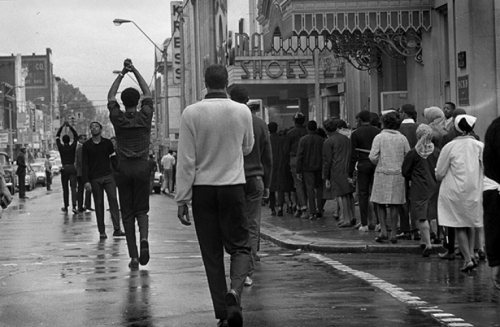
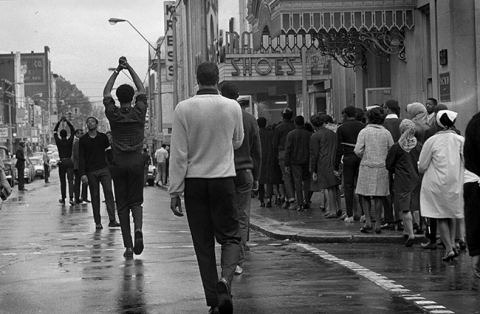
Into this racially tense situation walked a young community organizer named Howard Fuller. He went door-to-door in Durham’s poor areas, recruiting people to serve on neighborhood councils and confront the landlords. When the city housing authority wouldn’t back up the black residents, the residents started demonstrating and marching. And the local Ku Klux Klan started demonstrating right back.
Scenes like these played out all over North Carolina in the 1960s. In To Right These Wrongs, Robert Korstad and James Leloudis tell some of those stories: how activists supported by Governor Terry Sanford’s North Carolina Fund went into the state’s poorest communities and shook things up. The North Carolina Fund was like nothing any other state had tried before. It started out modestly as a nonprofit that financed experimental antipoverty projects, but it ended up getting money from the federal government and creating programs that were the blueprints for Head Start and for VISTA, the domestic Peace Corps.
The North Carolina Fund ran literacy programs, built parks, tutored kids, organized craft cooperatives, and helped towns apply for state and federal grants. But the fund also dealt with suspicion from local governments and prejudice from residents who didn’t like to see black and white volunteers living and working together. To many whites, community organizers like Fuller were just making trouble and being paid by the fund to do it. Others thought the situation in Durham was so bad, there would have been rioting and violence if Fuller hadn’t emerged as a leader and insisted on peaceful, nonviolent demonstrations, even when armed Klansmen came out to demonstrate alongside the blacks’ marching route.
When the fund ended in 1968, as it had planned to from the beginning, it left behind a network of organizations across North Carolina that are still fighting against poverty and for education. But the tone of activism isn’t the same as it was in the sixties, says Leloudis.
One N.C. Fund volunteer wrote: “I think to be able to help others is more than an opportunity; it is a duty that is part of the democratic form of government which we have.” Perhaps because the United States was under threat from communism, some Americans were examining whether their way of life was justifiable if it led to a significant number of people living in poverty.
“One of the things we lost after 1968 was a moral language for talking about poverty,” Leloudis says. “We lost an ability to talk about and act on poverty as an ethical challenge in a democratic society.”
James Leloudis is a professor of history and director of the James M. Johnston Center for Undergraduate Excellence at Carolina. Robert Korstad is the Kevin D. Gorter Professor of Public Policy and History at Duke.
Forty years after the North Carolina Fund ended, some of its key figures appeared in a documentary, Change Comes Knocking: The Story of the North Carolina Fund. Hear what Howard Fuller and other activists (as well as some of the fund’s critics) have to say about it now. A DVD of the film is included with To Right These Wrongs. Visit www.torightthesewrongs.com.